

EV Battery Management System Market to Reach US$24.9 Billion by 2033 at 19.4% CAGR | Persistence Market Research
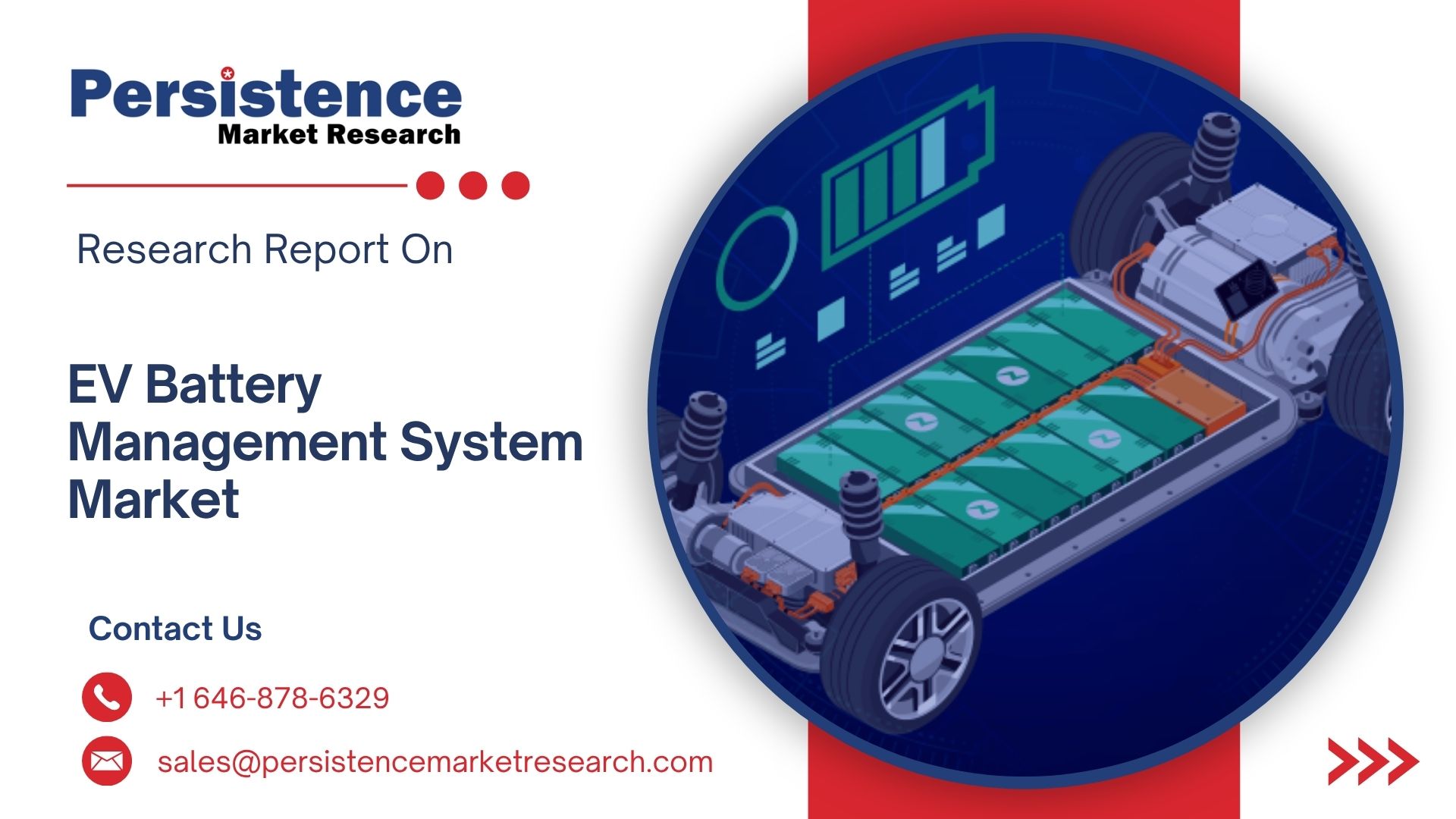
EV Battery Management System Market Size and Trend Analysis
Rising electric vehicle adoption and advancements in battery technology are driving strong demand for efficient battery management systems worldwide.
BRENTFORD, LONDON, UNITED KINGDOM, April 16, 2026 /EINPresswire.com/ -- The EV battery management system market is emerging as a critical component in the global electric mobility ecosystem, driven by the rapid adoption of electric vehicles and advancements in battery technologies. Battery management systems (BMS) play a vital role in monitoring battery health, optimizing performance, and ensuring safety in electric vehicles. As governments worldwide push for cleaner transportation and reduced carbon emissions, the demand for efficient battery systems has increased significantly. Automakers are focusing on integrating advanced BMS solutions to enhance battery life, improve driving range, and ensure optimal energy utilization across passenger and commercial electric vehicles.
The global EV battery management system market is expected to reach US$7.2 billion in 2026 and US$24.9 billion by 2033, growing at a CAGR of 19.4% over the forecast period from 2026 to 2033. This strong growth is fueled by rising EV adoption, increasing investments in battery technology, and supportive government policies promoting electric mobility. Lithium-ion batteries remain the leading segment due to their high energy density and widespread usage in electric vehicles. Asia Pacific dominates the market owing to the presence of major EV manufacturers, robust supply chains, and large-scale production of batteries in countries such as China, Japan, and South Korea.
Get Free Sample Now: https://www.persistencemarketresearch.com/samples/36450
The key players studied in the report include:
• Infineon Technologies
• Zebra Technologies
• Panasonic
• Cyient
• SRM Technologies Private Ltd.
• Monolithic Power Systems, Inc.
• Aptiv
• LOHUM
• eInfochips
• STMicroelectronics
• LocoNav
• Cavli Inc.
• Tata Elxsi
• Bacancy Company
• LEM International SA
• Texas Instruments
Key Highlights from the Report
➤ The EV battery management system market is projected to grow from US$7.2 billion in 2026 to US$24.9 billion by 2033 at a CAGR of 19.4%.
➤ Rising adoption of electric vehicles globally is significantly increasing the demand for advanced battery management systems.
➤ Growing investments in lithium-ion battery technologies are enhancing system efficiency and performance capabilities.
➤ Integration of smart monitoring and real-time diagnostics is improving battery safety and lifecycle management.
➤ Asia Pacific leads the market due to strong EV manufacturing ecosystems and government support for clean mobility.
➤ Increasing focus on energy efficiency and battery optimization is driving innovation in EV battery management technologies.
Market Segmentation
By Battery Type
• Lithium-Ion (Li-Ion)
• Nickel-Metal Hydride
• Others
By Propulsion Type
• Battery Electric Vehicle
• Hybrid Electric Vehicle
By Topology
• Modular BMS
• Decentralized BMS
• Centralized BMS
By Vehicle Type
• Passenger Car
• Commercial Vehicles
• Others
By Regions
• North America
• Europe
• East Asia
• South Asia & Oceania
• Latin America
• Middle East & Africa
Request For Customization: https://www.persistencemarketresearch.com/request-customization/36450
Regional Insights
Asia Pacific dominates the EV battery management system market due to its strong electric vehicle manufacturing base and large-scale battery production capabilities. Countries such as China, Japan, and South Korea are investing heavily in EV infrastructure and battery technology development. Government incentives, subsidies, and favorable policies supporting electric mobility have accelerated market growth in the region. The presence of leading battery manufacturers and automotive companies further strengthens Asia Pacific’s position as the leading regional market.
North America and Europe are also experiencing significant growth in the EV battery management system market, driven by increasing adoption of electric vehicles and stringent environmental regulations. Governments in these regions are promoting EV adoption through tax incentives and infrastructure development, including charging networks. Automakers are investing in research and development to improve battery efficiency and integrate advanced BMS technologies. The focus on sustainability and reducing carbon emissions continues to drive market expansion across these regions.
Market Drivers
The primary driver of the EV battery management system market is the rapid growth in electric vehicle adoption worldwide. Consumers are increasingly shifting toward electric mobility due to rising fuel costs and environmental concerns. Governments are implementing strict emission regulations and offering incentives to promote EV adoption, which directly boosts demand for battery management systems. As EV sales increase, the need for efficient battery monitoring and performance optimization becomes critical, driving market growth.
Another key driver is the advancement in battery technologies, particularly lithium-ion batteries. Innovations in battery design, energy density, and charging capabilities require sophisticated battery management systems to ensure safe and efficient operation. BMS solutions help prevent overcharging, overheating, and battery degradation, thereby extending battery lifespan. Additionally, the integration of smart technologies such as real-time monitoring and predictive analytics is enhancing the functionality of battery management systems, further supporting market expansion.
Market Opportunities
The EV battery management system market offers significant opportunities driven by the expansion of electric mobility and advancements in energy storage technologies. The growing demand for high-performance batteries in electric vehicles creates opportunities for innovative BMS solutions that enhance efficiency and reliability. Manufacturers are focusing on developing advanced systems with improved monitoring, diagnostics, and predictive capabilities to meet evolving market needs.
Another major opportunity lies in the integration of artificial intelligence and IoT technologies in battery management systems. These technologies enable real-time data analysis, predictive maintenance, and enhanced battery performance optimization. As smart mobility solutions continue to evolve, the demand for intelligent BMS systems is expected to increase. Additionally, the expansion of EV charging infrastructure and increasing investments in renewable energy integration further create opportunities for market growth.
Buy Now: https://www.persistencemarketresearch.com/checkout/36450
Recent Developments
• January 2024 – A leading semiconductor company launched an advanced EV battery management chipset designed to enhance battery efficiency and safety.
• September 2023 – A major automotive technology firm introduced a next-generation battery management system with improved real-time monitoring capabilities.
Future Opportunities and Growth Prospects
The EV battery management system market is poised for substantial growth in the coming years, supported by the global transition toward electric mobility and sustainable energy solutions. Continuous advancements in battery technologies, increasing investments in EV infrastructure, and rising demand for efficient energy management systems are expected to drive market expansion. As automakers and technology providers focus on innovation and performance optimization, the market is likely to witness new growth avenues and technological breakthroughs.
Persistence Market Research
Persistence Market Research Pvt Ltd
+1 646-878-6329
email us here
Visit us on social media:
LinkedIn
Instagram
Facebook
YouTube
X
Legal Disclaimer:
EIN Presswire provides this news content "as is" without warranty of any kind. We do not accept any responsibility or liability for the accuracy, content, images, videos, licenses, completeness, legality, or reliability of the information contained in this article. If you have any complaints or copyright issues related to this article, kindly contact the author above.
